Technical Myth vs Fact: Debunking Common Misconceptions About Aluminium Profiles

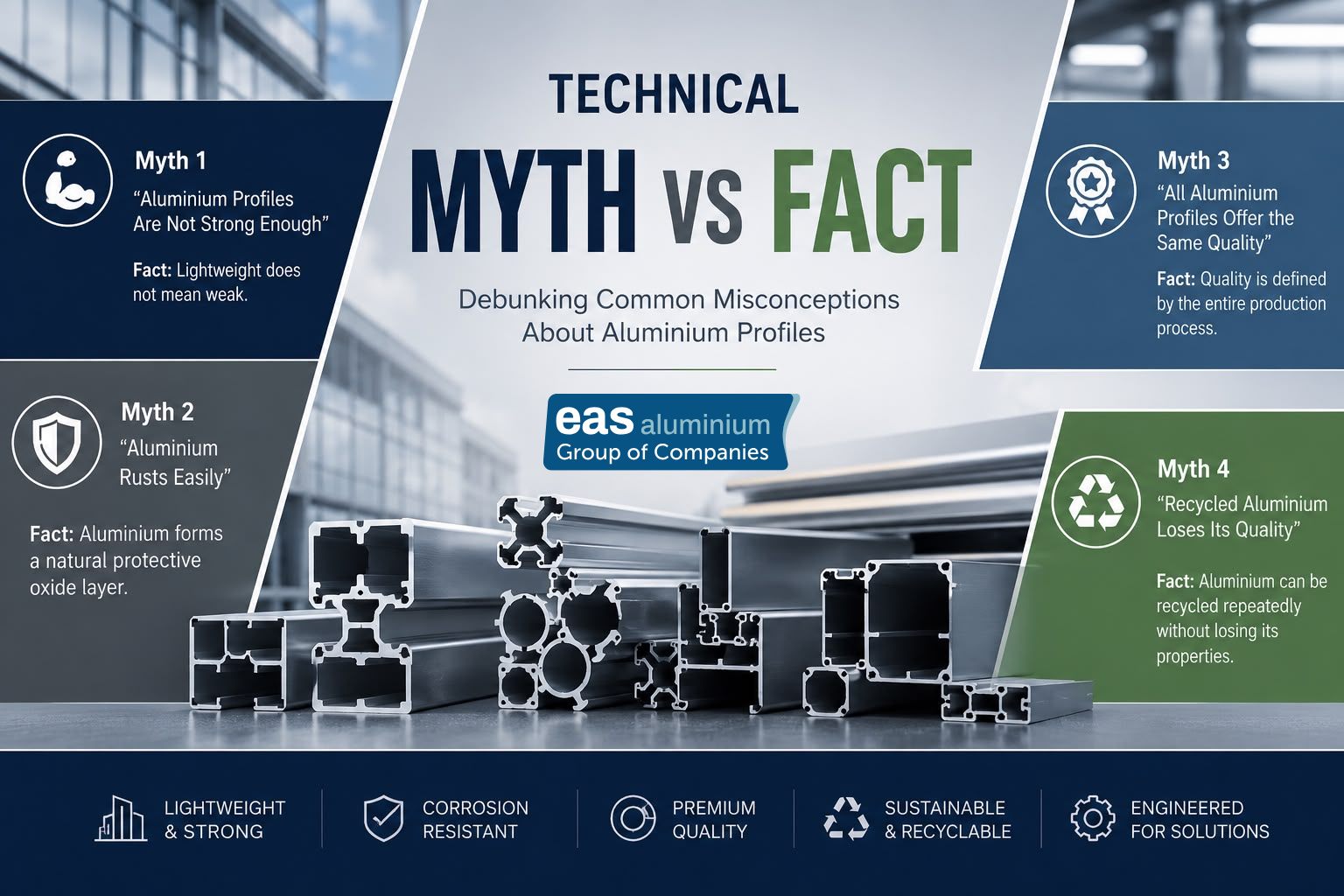
Aluminium profiles have become one of the most widely used engineering solutions across construction, architecture, automotive, transportation, renewable energy, defense, and industrial manufacturing thanks to their lightweight structure, high strength-to-weight ratio, corrosion resistance, and sustainability. However, many misconceptions about aluminium extrusion, aluminium alloys, and manufacturing technologies continue to influence material selection and engineering decisions.
To promote technical awareness and encourage the dissemination of reliable industry knowledge, EAS Aluminium is launching its Technical Myth vs Fact content series. Through this initiative, the company aims to address common misconceptions about aluminium profiles by presenting engineering-based facts supported by industry expertise and internationally recognized manufacturing standards.
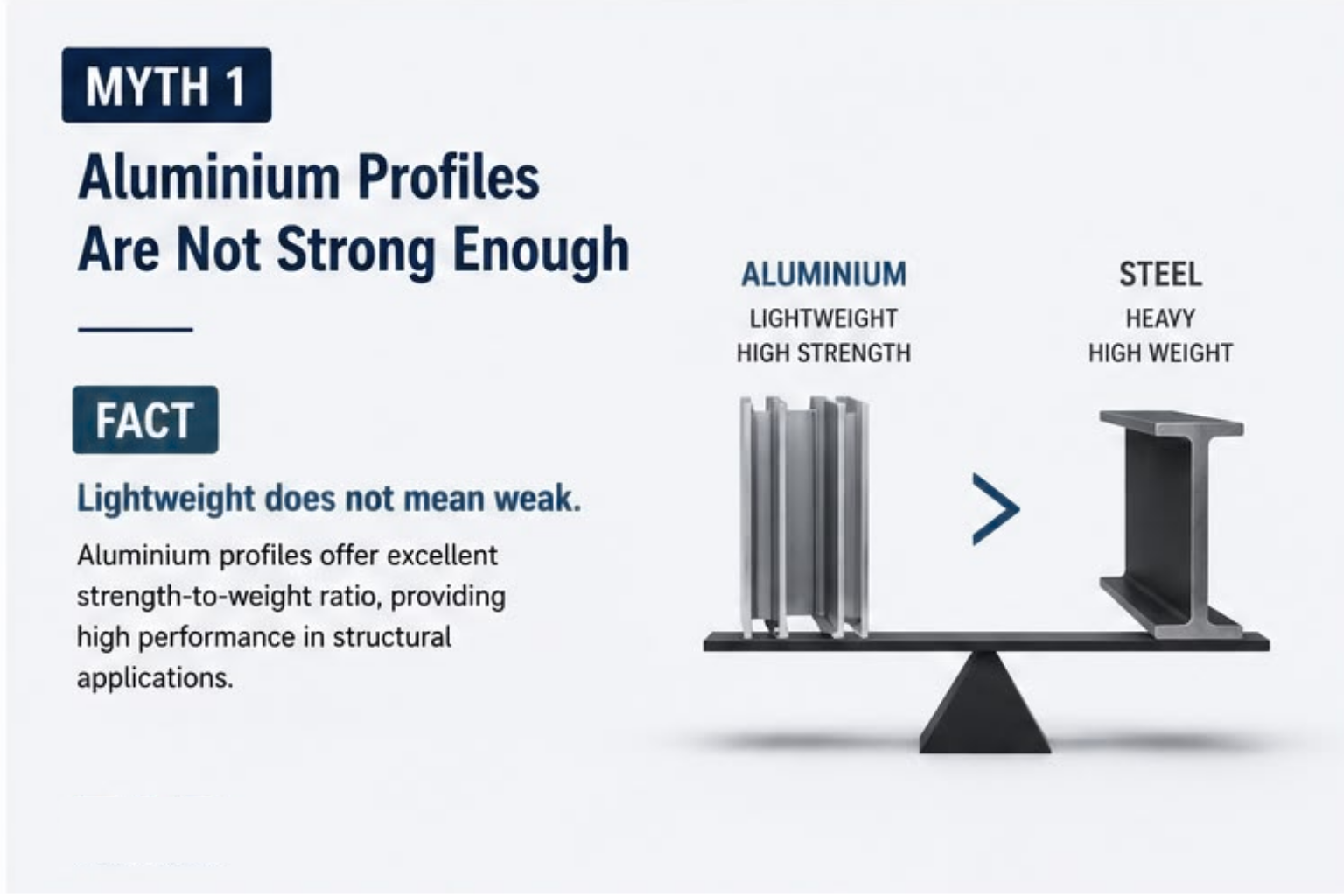
Myth 1: “Aluminium Profiles Are Not Strong Enough”
Fact
Lightweight does not mean weak.
With the right aluminium alloy, advanced extrusion technology, and controlled heat treatment processes, aluminium profiles can achieve outstanding mechanical performance. Extrusion alloys such as 6060, 6063, 6005, 6082, 6106, and 6754 are widely used in architectural façade systems, industrial machinery, automotive components, railway applications, and structural engineering projects.
Thanks to their exceptional strength-to-weight ratio, aluminium profiles reduce structural weight while improving transportation efficiency, installation performance, and overall energy savings.
Suggested Visual: Infographic comparing the strength-to-weight ratio of aluminium and steel profiles.
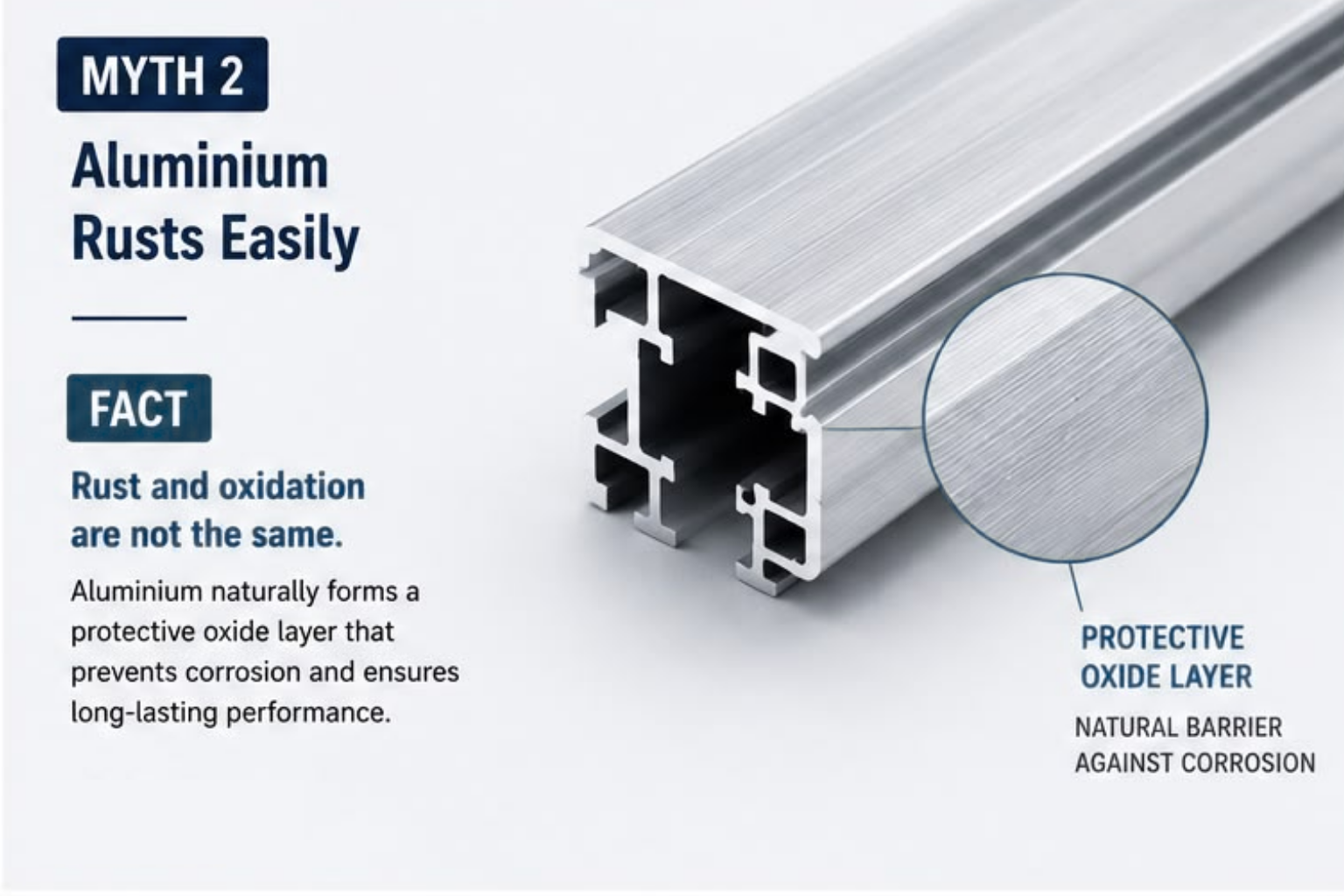
Myth 2: “Aluminium Rusts Easily”
Fact
Rust and oxidation are not the same.
Unlike steel, aluminium naturally forms a thin protective oxide layer when exposed to air. This invisible barrier protects the material against environmental conditions and provides excellent corrosion resistance without compromising its performance.
Additional surface treatments such as anodizing and powder coating further enhance resistance to UV exposure, moisture, chemicals, and harsh outdoor environments. This is why aluminium profiles are widely preferred for façade systems, windows, doors, curtain walls, and other long-lasting architectural applications.
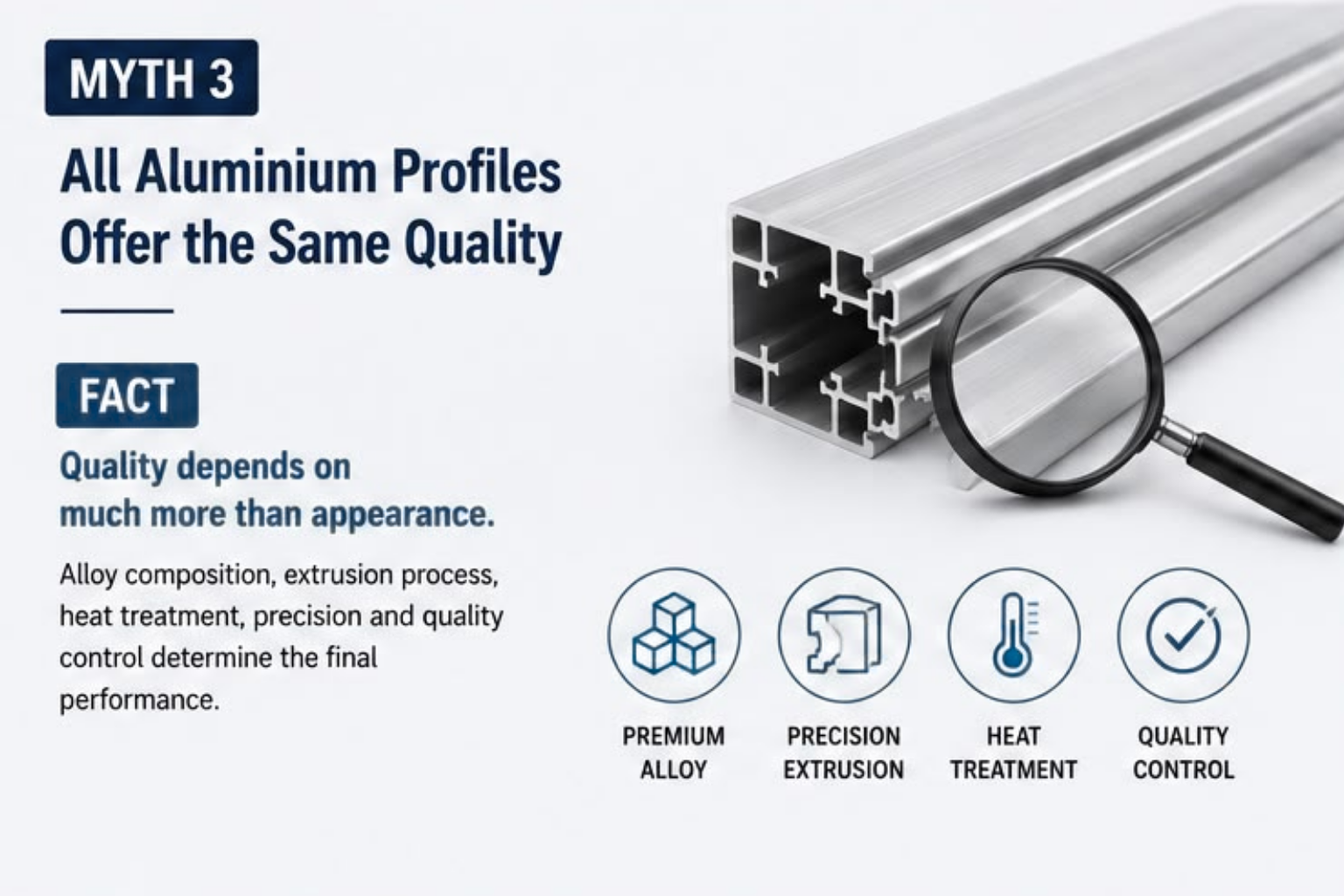
Myth 3: “All Aluminium Profiles Offer the Same Quality”
Fact
The quality of an aluminium profile depends on much more than its appearance.
Factors such as alloy composition, extrusion parameters, die design, heat treatment, dimensional tolerances, surface finishing, and quality control procedures all determine the final product’s performance.
Comprehensive laboratory testing and inspections carried out in accordance with international quality standards ensure high dimensional accuracy, structural reliability, and long service life. As a result, two aluminium profiles with identical dimensions may perform very differently depending on their manufacturing process.
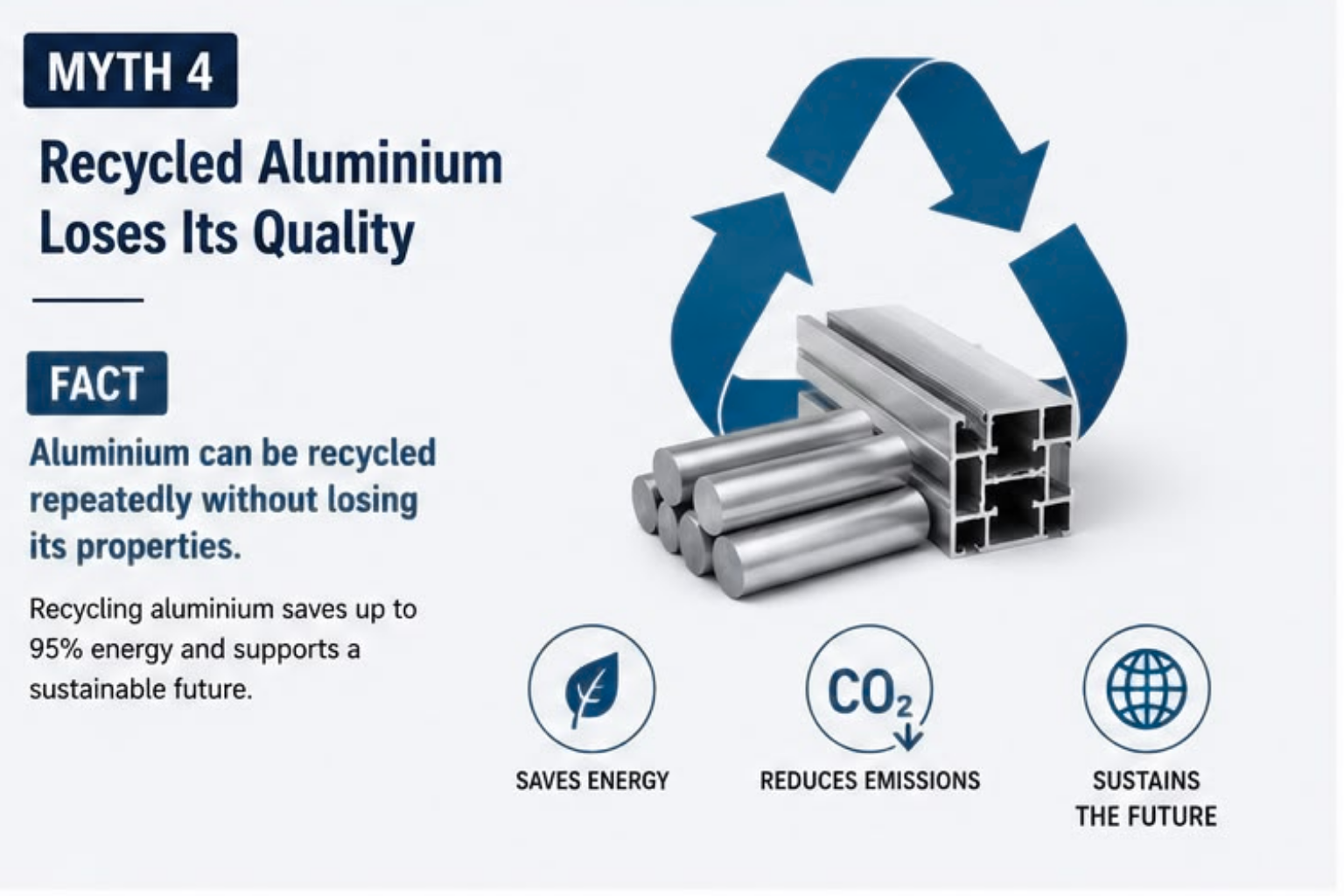
Myth 4: “Recycled Aluminium Loses Its Quality”
Fact
Aluminium is one of the few engineering materials that can be recycled repeatedly while retaining nearly all of its original properties.
Proper aluminium recycling processes require up to 95% less energy than primary aluminium production, significantly reducing carbon emissions and conserving natural resources.
For this reason, recycled aluminium plays a vital role in the circular economy, sustainable manufacturing, and environmentally responsible industrial production.
Accurate Knowledge Drives Better Engineering
At EAS Aluminium, we believe that advanced manufacturing should be supported by the sharing of reliable technical knowledge.
Alongside producing high-quality aluminium profiles using modern aluminium extrusion technologies and advanced quality control systems, we are committed to helping engineers, architects, manufacturers, and industry professionals make informed decisions through our Technical Myth vs Fact series.
Future editions will cover a wide range of topics, including aluminium extrusion technology, surface treatment processes, aluminium alloys, die design, quality assurance, recycling, sustainable manufacturing, and industrial applications.
Accurate information is the foundation of the right material selection. Strong engineering begins with the right knowledge.